Collective violence, defined as the intentional use of physical violence or threats either by or against a group of people, has been a prominent issue in Indonesia since the turn of the century. Although the gravity of each incident is arguably less significant than incidents during the New Order era, the number of incidents keeps growing throughout the year. However, there are not many publicly accessible databases that continuously monitor the trends and movements of these incidents.
To fill the gap, the Centre for Strategic and International Studies (CSIS) and the Asia-Pacific Centre for the Responsibility to Protect (APR2P) came up with an initiative to systematically gather data on collective violence incidents from verifiable provincial and national news sources in Indonesia. This initiative led to the formation of the Collective Violence Early Warning (CVEW) Dataset in 2021. Since then, the Dataset has been able to break down each incident into up to 35 data points, enabling comprehensive analysis on timelines, actors, issues, among many others.
Violence monitoring became particularly crucial in 2025 to picture how the Indonesian society responded to the changes in government. In late 2024, President Prabowo Subianto was inaugurated, and due to his leadership style and ‘fat’ coalition, now has full control over policies and budgeting. The Prabowo administration has also introduced changes in important legislation and introduced new populist policies. These changes, however, can spark more violence in society, especially when members of the public are not involved meaningfully during the deliberation processes.
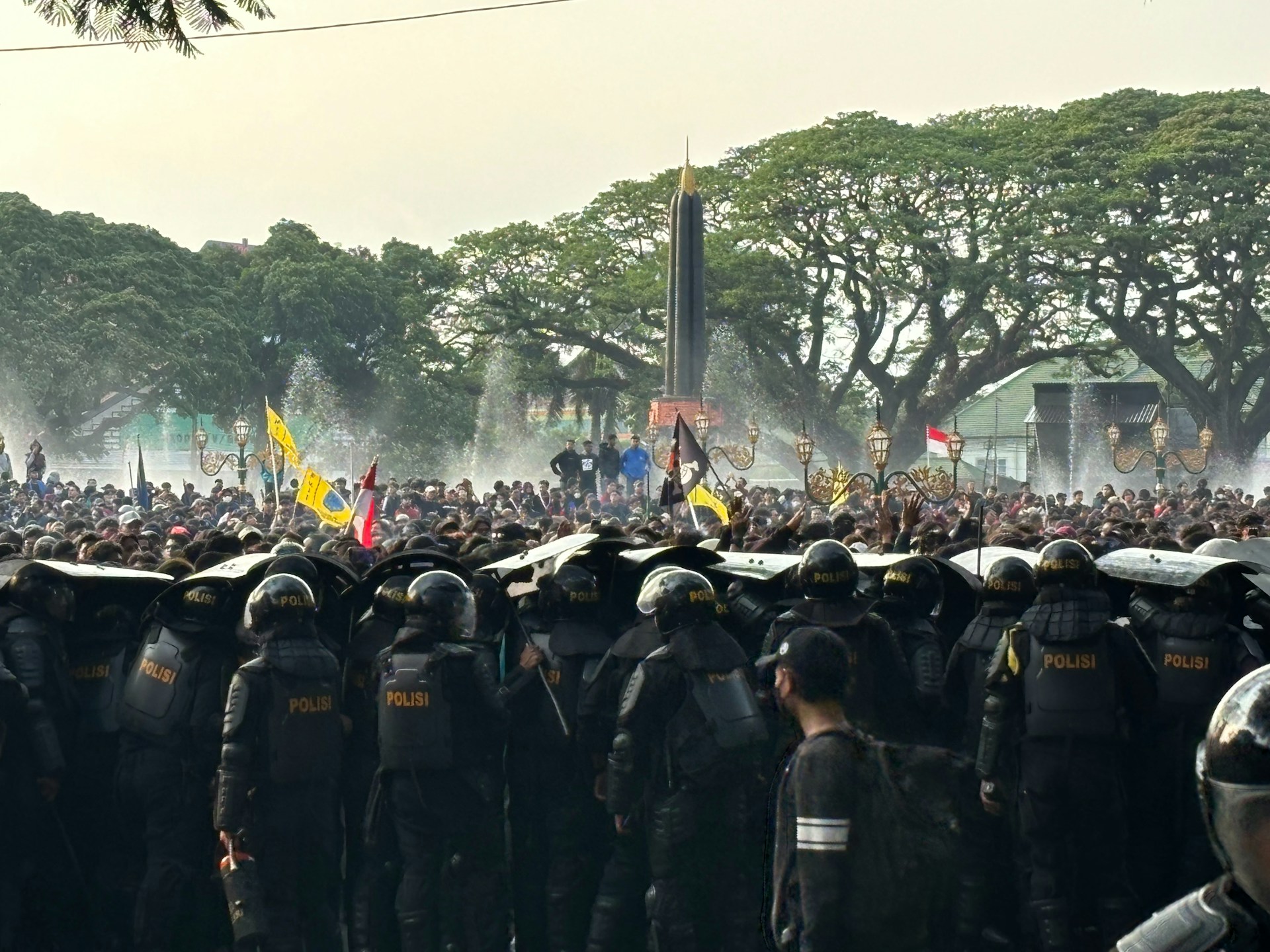
This Policy Brief will present the annual trend of collective violence incidents in 2025. Our analysis found that 2025 became the year with the highest number of incidents since CVEW started in 2021. Although many of the incidents were sparked by vigilantism activities, some incidents were inseparable from systemic, yet sudden, policy changes introduced by those in power. The most recognizable incident may be the protest against an increase in allowance for parliament members in August 2025, which led to nationwide protests and riots.
The Brief will be structured into the following sections. First, we will present highlights of the data that was collected in 2025, including its patterns, impacts, and distributions. Next, we will analyze three separate topics, namely vigilantism, the effects of changes in government policies, and some warnings for other related issues. Lastly, we will present a recommendation for both policymakers and members of civil society.